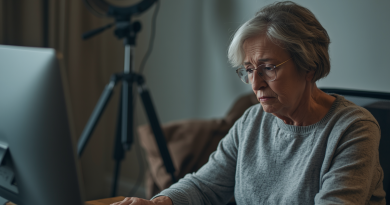
When Sarah Missed The Unicorn, Her Daughter’s Face Fell. This time, she would choose her own family!
Sarah knew the time had come to make some difficult decisions when she missed the unicorn!
Sarah Mitchell had grown used to the sight of her son slouched on the sofa, face bathed in the cold blue glow of his phone. After school, Andy would barely grunt hello before sinking into his screen, thumbs moving furiously while his shoulders hunched tighter and tighter.
But lately… something had changed. She wasn’t sure what it was but it was a positive. He didn’t seem to be quite as tense, not quite as involved with the online world.
“Guess what, Mum?” Andy burst through the door one Tuesday afternoon, cheeks flushed, hair sticking up in tufts.
“What?” Sarah asked, stirring pasta on the stove.
“I helped Rob fix his motorbike!”
Sarah blinked. “Rob? From next door?”
Andy nodded eagerly. “He let me clean the spark plugs, and I got oil on my hands and everything. It was brilliant.”
Sarah nearly dropped the spoon. This was the boy who couldn’t be dragged away from his phone for dinner, suddenly talking about… motorbikes? Rob their next door neighbour had always been polite, she would see him pluttering about in his garden but motorbikes, she wasn’t quite sure how she felt about Andy getting involved with motorbikes.
She smiled carefully. “That sounds… messy.”
Andy grinned wider. “Messy and amazing.”
That night, Sarah watched him laugh with his sister Emma over dessert, his phone forgotten in his backpack. And for the first time in months, she felt something shift in her chest, relief. His constant need to see who was doing what, who had said what, seemed to have dwindled. That had to be a positive.
It took Sarah longer to notice the second change.
Andy was using his phone less, yes. But what unsettled her was the way he looked at her. It wasn’t like he was staring at her but she caught him watching her out of the corner of his eye or glancing in her direction quickly and then away again.
One evening, she was scrolling through WhatsApp messages while Emma tugged at her sleeve, chattering about a drawing she’d made.
“Mum, look! It’s a unicorn with wings!” Emma held up a crayon-scribbled masterpiece.
“Uh-huh, lovely,” Sarah mumbled, still typing.
When she finally glanced up, Emma’s face had fallen, the picture drooping in her small hands. Andy sat at the table with a Rubik’s Cube, watching silently. The atmosphere in the room had changed, deflated slightly, like it was tired.
A few minutes later he said, “Mum, you know I don’t use my phone much now, right?”
“Yes,” Sarah replied absently.
“It’s because at Rob’s, we’re not allowed. And honestly… it feels better. Like, I notice stuff more.”
She looked up then, meeting his steady gaze.
“Like what?”
“Like Emma’s unicorn,” Andy said quietly.
The words stung more than Sarah expected.
That night, lying in bed, she stared at her phone until her reflection blurred on the screen. She didn’t like what she saw. How had it got to the point where the pontificating of strangers held more of her attention than the accomplishments of her children? What was she teaching them about the importance of their lives, of the family, of their place in the world?
The next morning, Sarah made a decision. She started by leaving her phone in her handbag while she made breakfast.
“Toast or cereal?” she asked, actually sitting down at the table.
“Toast!” Emma chirped.
Andy peered at her suspiciously. “You’re not scrolling?”
Sarah laughed. “Nope.”
“Yay, Mummy’s looking!” Emma clapped.
It was such a small moment, yet it filled Sarah with the heat of shame. How much had she been buried in her phone recently that the fact she asked her kids if they wanted toast or cereal whilst looking at them was something to be celebrated?
Her mind whirled with flashbacks of handing them snacks without looking them in the eye, watching her phone instead. The constant “Give me a second” as she commented or replied on posts that were nothing more than clickbait. Putting her kids needs as secondary to some influencer or nameless corporation.
Her face reddened as she started to realise the full extent of her inattention to her children. No more she decided, if Andy could wean himself off that little electronic slave master then so could she!
At work, she tried again. Phone in the drawer, lunch with colleagues instead of hunched over her screen. Conversation flowed, and she realised how long it had been since she’d laughed over sandwiches. There were however a few of her colleagues who were doing what she had done up until today. Using their lunch break to reconnect to the digital world. Sadly, she noted, they didn’t appear to be enjoying the experience. It seemed more like an automatic action. Not to find something out or get information, just a constant swiping to devour more content.
As she watched them from the corner of her eye, the itch to check her phone was strong, but every time she resisted, she noticed more – the crisp taste of apples, the sound of birds outside the office window, the way people’s eyes lit up when she gave them her full attention.
Maybe Andy was onto something.
At the school gates, Sarah overheard two mums chatting.
“Have you heard about this ‘Offline Club’? My son’s been going. They hang out at Rob’s, no phones allowed. He actually helped plant carrots yesterday!”
Sarah almost laughed. So that was the secret.
That evening, she asked Andy.
“It’s not a big deal,” he said, though his grin suggested otherwise. “We just do stuff. Build things, fix things. It’s fun.”
“Sounds wonderful,” Sarah said.
“You could try it too, Mum,” Andy added shyly. “Not just kids, you know.”
The idea lingered in her mind long after bedtime. Whilst the idea of encouraging herself to spend less time on her devices seemed a positive, she was pretty sure she did not want to be diluting Andy’s experiences with Rob and his friends. She would look into other options, something she could do that gave her time away from her device while at the same time doing something positive.
The following week, Sarah volunteered for a shift at the community centre’s food bank.
At first, she kept patting her pocket for her phone, only to remember she’d left it zipped in her bag. But then Marjorie, an older volunteer, struck up a conversation while stacking canned beans. A young dad cracked jokes while sorting pasta. By the time they finished, Sarah realised two hours had passed without once checking her screen.
She walked home lighter, smiling at the night air, at the thought of Emma’s drawings and Andy’s eager updates. She had noticed in the last few days that Andy and Emma had stopped messaging her on the various apps she had available. Instead, they waited to tell her things in person. Show her what they had done whether it was the result of a test at school or a new artistic effort. They obviously enjoyed the direct personal connection much more than a quick text to send a picture then waiting to see if she would reply.
The itch to check her phone was still there—but the joy of connection was louder.
Sarah returned to the food bank the next week. And the next. She made friends, joined a book club with other volunteers, and even suggested an “offline” tea-and-cake afternoon at the centre.
When she mentioned the Offline Club and the difference it had made to her family, people’s eyes lit up.
“That’s exactly what people need,” one woman said. “My daughter’s glued to her phone. Maybe I’ll bring her along.”
Another nodded. “It’s spreading, you know. Kids are at the park again. My husband even leaves his phone at home when we walk.”
Sarah’s chest swelled with pride. Not just for Andy, but for herself, too.
Life at home began to change in subtle but powerful ways.
Phones stayed in a basket by the door during dinner. Board games returned to the table. Emma’s drawings filled the fridge. Andy helped cook meals, chatting about vegetables from Rob’s garden. Emma joined in, setting out the crockery and cutlery, washing vegetables from the garden.
One evening, Sarah and the kids baked cookies. Flour dusted the counters, chocolate smeared Emma’s cheek, and Andy laughed so hard he nearly dropped the tray. Sarah’s phone buzzed on the counter, but she ignored it.
“This is better,” Andy said simply.
Sarah agreed.
One afternoon, Sarah walked past Rob’s garden. The Triumph gleamed in the driveway, and laughter spilled from the garage where Andy and his friends tinkered.
Emma skipped beside her, clutching a new drawing.
“Mummy,” Emma asked, “can you come watch me colour? Don’t look at your phone, okay?”
Sarah knelt down, kissed her forehead, and said, “I’d love to.”
She thought of the woman she’d been six months ago—tired, distracted, always half-elsewhere—and felt a swell of gratitude that she hadn’t known was possible.
That evening, Sarah curled up on the sofa with Andy on one side, Emma on the other. Andy read a book, Emma doodled. The phone buzzed again on the counter, but Sarah stayed where she was.
“You two,” she whispered, hugging them close, “are the best notifications I’ll ever need.”
Andy smiled. Emma giggled. And for the first time in a long time, Sarah felt fully, beautifully present.