
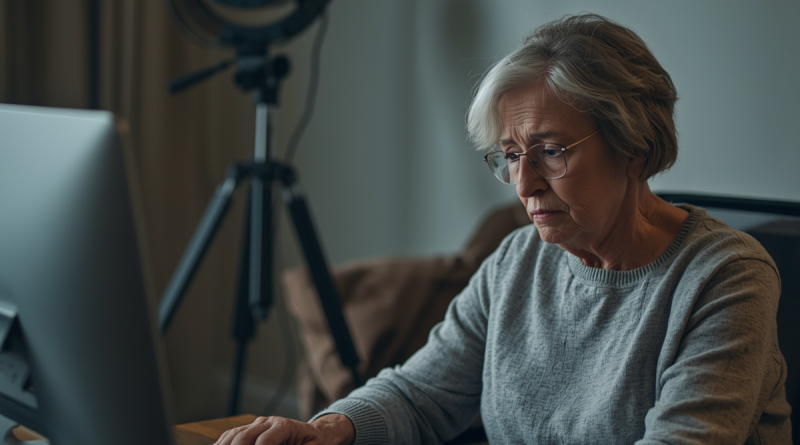
The Quality and Standards Invite Was A Warning
Lucy stared at the email for a long moment before opening it. The subject line alone was enough to make her stomach tighten.
Quality and Standards Discussion
There it was. Plain. Clinical. Final.
Outside, rain tapped softly against the living room window, and somewhere upstairs the washing machine thudded into another spin cycle. The ordinary sounds of Thursday morning suddenly felt far away, muffled behind the rushing noise in her ears.
She clicked the message open.
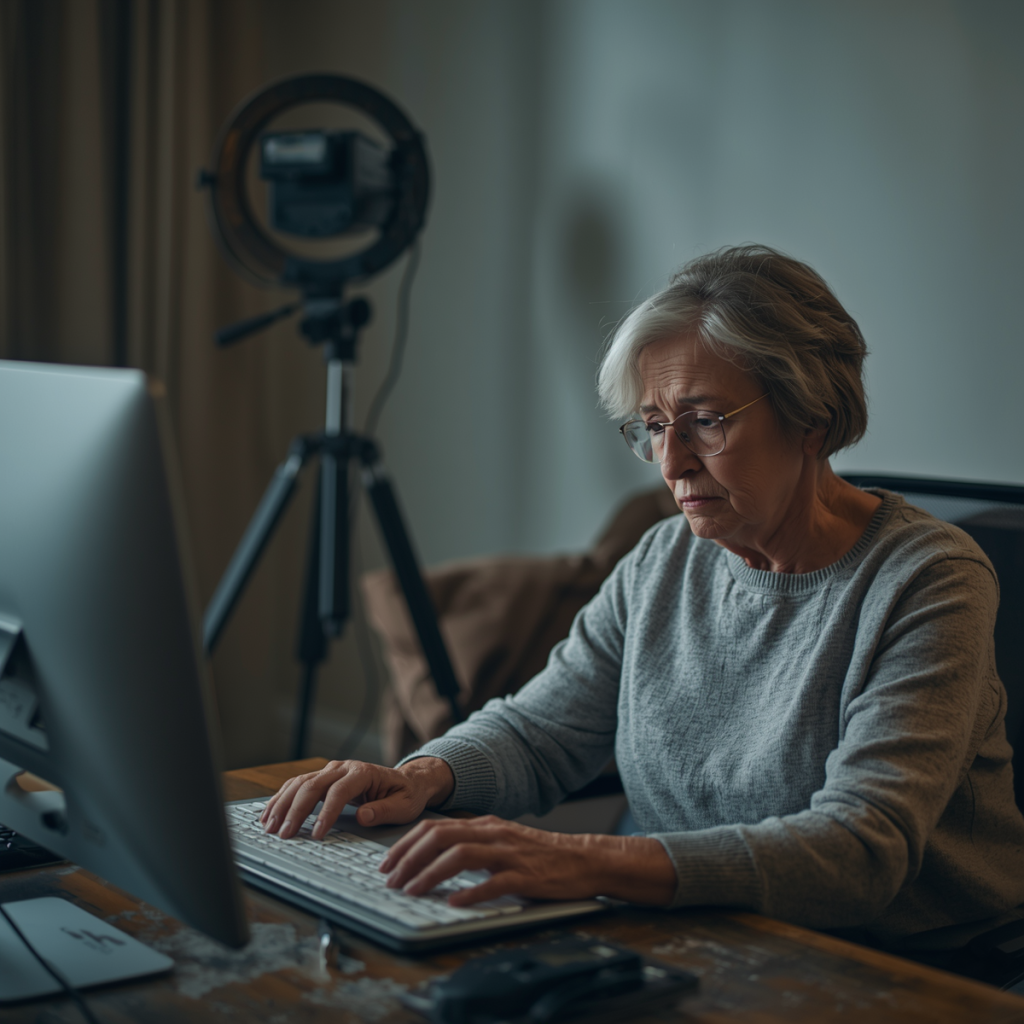
Her manager’s words were polite enough. They always were. There would be a meeting tomorrow morning when Lucy returned to the office. Concerns remained regarding the standard of her work. They needed to discuss “next steps.”
Next steps.
Lucy leaned back slowly in her chair and removed her reading glasses, rubbing the bridge of her nose with tired fingers. At sixty years old, she knew exactly what “next steps” meant.
This was the beginning of the end.
For a few moments she simply sat there in the dim morning light of her small semi-detached house in Falkirk, listening to the hum of the laptop. The screen glowed against the framed family photographs on the shelf nearby — her daughter at graduation, her late husband smiling beside a caravan in Skye, two elderly faces she now saw more often in doctors’ waiting rooms than anywhere else.
Her parents.
That thought tightened something inside her chest.
The mistakes had started small enough eighteen months ago when she began the job. Missing commas. Uneven formatting. Paragraphs not aligned correctly on client documents. Tiny things other people spotted instantly but which seemed invisible to her until someone pointed them out.
At first she had laughed them off.
“Just getting used to the system,” she’d said.
Then six months passed.
Then a year.
Now every document she sent felt like a test she was destined to fail.
The cruel part was that she knew she was intelligent. She understood the work itself perfectly well. She cared about clients. She met deadlines. She stayed late when needed. But the finer details — the things everyone else seemed able to catch effortlessly — kept slipping through her fingers like grains of sand.
And lately it was getting worse.
Lucy opened the day’s workload on the company system, but the words blurred together. Her mind drifted instead to the previous Sunday afternoon at her mother’s bungalow.
“Have you seen my handbag?” her mother had asked five times in twenty minutes.
It had been hanging on the back of the kitchen chair the entire time.
Her father had stood at the window in slippers, asking when his brother was coming to visit, despite the fact his brother had died in 1998.
Some days they still seemed almost normal. Other days felt like watching two people slowly disappear while their bodies remained behind.
The doctors had called it “progression.”
Lucy called it theft.
And quietly, privately, she had begun to fear the same thing was happening to her.
Not dramatically. Not all at once. Just little missing pieces.
A forgotten word here.
A missed detail there.
The strange inability to notice obvious mistakes sitting directly in front of her.
She had never told anyone how frightened she truly was. Not her daughter. Not her colleagues. Certainly not her employer.
Who would hire a sixty-year-old woman who admitted she feared she was becoming forgetful?
No one.
The government might expect her to work another seven years before retirement, but sitting there in the pale grey light of Thursday morning, Lucy could not imagine surviving another seven months in that office.
Her eyes drifted again to the email.
Tomorrow.
At least they were waiting until tomorrow.
That gave her one day.
One precious day to figure out how not to fall apart.
She inhaled deeply, sat upright, and reached for her mug of tea, only to discover it had already gone cold.
Typical.
For years, Lucy had believed stability mattered more than dreams. Steady income. Reliable routine. Practical decisions. After her husband died suddenly from a heart attack eight years earlier, practicality had become her religion.
You survive first. Dream later.
Except “later” had somehow become “never.”
Still, there had been one small corner of her life she had kept for herself.
Her YouTube channel.
A tiny channel, really. Nothing impressive. A few thousand subscribers gathered over several years. Videos about midlife, quiet living, simple Scottish walks, reflections on getting older, recipes, thrift shopping, little conversations about loneliness and resilience.
At its peak it had made enough money each month to cover groceries and petrol. Not life-changing, but encouraging. Then work pressures and caring for her parents had swallowed her time whole.
Uploads became irregular.
Then sporadic.
Then almost nonexistent.
The audience drifted away quietly, the way audiences do online.
Still, every so often, comments appeared beneath old videos.
“Your voice helped me through a difficult time.”
“You make me feel less alone.”
“Please come back.”
Lucy swallowed hard.
Beside YouTube sat her abandoned TikTok account, dusty as an old attic box. She barely understood the platform, truthfully. Fast videos, trends, music clips — it had all seemed ridiculous to her at first.
But recently she had noticed women her age building enormous audiences simply by speaking honestly about life.
Real people.
Real stories.
Not polished influencers with perfect kitchens.
Just ordinary women finding their voices.
Maybe people were tired of pretending.
Maybe she was too.
The thought sparked something faint inside her. Not hope exactly. More like the memory of hope.
She clicked open her YouTube dashboard.
The numbers were unimpressive.
But not dead.
A few videos still gained views each day without her touching them. Comments still appeared. One older video about rebuilding life after loss had suddenly picked up activity again.
Lucy stared at the analytics screen while her work emails piled up unanswered in another tab.
What if this wasn’t an ending?
The idea felt dangerous.
Ridiculous even.
At sixty years old, people were supposed to shrink their lives, not reinvent them. Society liked older women quiet, invisible, sensible.
But another voice whispered beneath the fear.
What if you have nothing left to lose?
The rain outside strengthened, streaking silver lines across the window. Somewhere nearby a dog barked. A delivery van hissed to a stop on the wet street.
Ordinary life carried on.
Lucy opened a blank notebook beside her keyboard and began writing.
YouTube ideas.
TikTok ideas.
Things people over fifty worry about.
Caring for parents.
Losing confidence.
Starting over later in life.
Financial fear.
Loneliness.
Finding purpose.
Her pen moved faster and faster.
For the first time in months, her mind did not feel trapped. It felt busy. Alive.
Terrified, yes.
But alive.
By lunchtime she had barely touched her office work. Guilt gnawed at her immediately, followed by anger at herself for still feeling guilty when she knew tomorrow’s meeting was already decided.
Her employers wanted perfection in documents.
Lucy no longer believed perfection was possible for her.
But perhaps honesty was.
She glanced again at the YouTube dashboard before opening TikTok for the first time in almost a year.
Password incorrect.
Lucy laughed unexpectedly.
A real laugh this time.
“Well,” she muttered to the empty living room, “that about sums things up.”
Rain battered the windows harder now, but something inside her had shifted.
Not solved.
Not healed.
Just shifted.
Like the first tiny movement of a compass needle finally finding north.
The meeting on Friday morning lasted exactly fourteen minutes.
Lucy knew this because she watched the second hand on the clock behind her manager’s head for almost the entire conversation.
There were no raised voices. No dramatic accusations. No cruelty.
In some ways, that made it worse.
Her manager spoke in the careful, measured tone companies used when they wanted to sound compassionate while protecting themselves legally.
“Unfortunately, despite support measures, concerns remain regarding accuracy and consistency.”
“Client-facing standards.”
“Ongoing errors.”
“Performance expectations.”
Lucy nodded at the appropriate moments and folded her hands tightly in her lap so nobody would notice they were trembling.
A formal improvement period.
Additional reviews.
Weekly monitoring.
But beneath the polished corporate language sat the truth both of them already understood.
They no longer believed she could do the job properly.
And, if she was honest, neither did she.
As she walked back to her desk afterwards, carrying a printed copy of the performance plan she would never complete successfully, something unexpected happened.
Relief.
Not complete relief. There was still fear sitting heavily in her chest. Bills still needed paid. The mortgage still existed. Her parents still needed help. Nothing practical had improved.
But the uncertainty was over.
The pretending had stopped.
For months she had been exhausting herself trying to hold back a tide she secretly knew was coming in anyway. Now the future stood plainly in front of her, uncomfortable but visible.
And strangely, visibility felt easier than dread.
Over the next two weeks, Lucy’s days divided cleanly into two separate lives.
At work, she became quieter.
Careful.
Measured.
She triple-checked emails before sending them. She printed documents to review punctuation manually. She wrote reminder notes on yellow sticky pads and lined them carefully along her monitor like tiny protective barriers.
CHECK FORMATTING.
READ SUBJECT LINE.
VERIFY ATTACHMENTS.
Even then, mistakes slipped through.
An extra space.
A missing bullet point.
An incorrect font size.
Small things.
Always small things.
But now every error felt magnified beneath the watchful eyes of management.
Twice she caught younger colleagues exchanging sympathetic glances when corrections came back to her.
Once she overheard someone whisper kindly in the kitchen:
“She’s lovely… I just think she’s struggling a bit.”
Lucy stood silently around the corner holding her tea bag, staring at the carpet while humiliation burned through her chest.
Struggling a bit.
The phrase followed her home that evening like cigarette smoke clinging to clothing.
But home itself was changing.
Rapidly.
Every evening after work became part renovation project, part reinvention.
The dining table disappeared beneath notebooks filled with content ideas.
The spare bedroom slowly transformed into what Lucy jokingly called “the studio,” despite the fact it was still mostly an ironing board and several cardboard boxes from Christmas.
She bought inexpensive cream cushions online after researching “warm backgrounds for videos.” Then came a small ring light which she struggled to assemble for almost forty minutes before discovering she had attached half of it upside down.
“You are not built for technology,” she informed herself sternly.
Archie watched from the doorway with deep concern.
Lucy also discovered, after several unfortunate experiments, that overhead lighting made her look exhausted while natural window light made her look thoughtful and calm.
This felt unfair.
She began opening curtains obsessively.
One Saturday morning she drove to a charity shop ten miles away after seeing another creator mention “thrifting props.” Lucy wasn’t entirely sure what props were, but apparently she needed them.
She returned home with:
Two ceramic mugs.
A knitted throw blanket.
Three hardback books purely because their covers looked attractive on camera.
And a small lamp shaped like a lighthouse.
The lamp made absolutely no sense with the rest of her décor, but she loved it immediately.
As the house changed, Lucy noticed something else changing too.
Herself.
She started taking more care with her appearance, though not in the dramatic way makeover television shows portrayed women her age. It was subtler than that.
Moisturiser became a routine instead of an afterthought.
She booked a haircut.
She began choosing clothes based not only on comfort but also on whether they reflected the person she wanted to become.
Soft jumpers.
Simple jewellery.
Colours that brightened her face instead of fading into the background.
One evening, while trying different camera angles in the living room, Lucy caught sight of herself unexpectedly on the phone screen.
Not glamorous.
Not youthful.
But alive in a way she had not looked for years.
Interested.
Curious.
Present.
The first TikTok video she posted happened accidentally.
She had recorded herself talking about the strange loneliness that sometimes arrived in your late fifties and early sixties — the way society slowly stopped expecting anything exciting from you.
Lucy almost deleted it immediately after filming.
The lighting was imperfect.
She stumbled over two sentences.
A bus drove past loudly halfway through.
But something about her expression in the video stopped her.
She looked honest.
So, heart pounding violently, she pressed “Post.”
Then she immediately threw the phone onto the sofa as though it might explode.
For the next hour she cleaned kitchen cupboards simply to avoid checking notifications.
When she finally looked, the video had only 112 views.
Lucy felt ridiculous for being disappointed.
Then she noticed the comments.
“Thank you for saying this.”
“I thought I was the only one who felt invisible.”
“You have such a calming voice.”
“Please make more videos.”
She sat down slowly at the kitchen table and reread every single one.
By bedtime the video had reached 2,300 views.
To younger creators, that number would have seemed tiny.
To Lucy, it felt astonishing.
Someone, somewhere, had listened.
The following week became a blur of cautious experimentation.
At work, she continued drifting quietly toward an ending.
At home, she began building a beginning.
She filmed herself making soup.
Talking while folding laundry.
Sharing thoughts during walks with Archie along muddy Scottish woodland paths.
Nothing polished.
Nothing trendy.
But people responded.
Especially women.
Women in their fifties. Sixties. Seventies.
Widows.
Carers.
Women restarting life after divorce.
Women terrified of redundancy.
Women who felt forgotten.
Lucy began waking each morning to dozens of comments from strangers across Britain, Ireland, Canada, Australia.
One message made her cry unexpectedly while sitting in the office toilet during lunch break.
“You make getting older seem less frightening.”
She stared at the screen for a long time afterward.
Because secretly, she was still frightened herself.
The performance meetings at work continued weekly.
Each one colder than the last.
Her manager remained professional but increasingly distant, as though emotionally preparing for Lucy’s departure before it officially happened.
During the third meeting, the phrase “unsuitable fit for the role” appeared.
Lucy barely reacted externally.
Internally, however, something settled quietly into place.
That night she sat in her newly rearranged living room surrounded by soft lamp light and looked around carefully.
The house no longer felt like somewhere she collapsed after work.
It felt like headquarters.
The ring light stood ready beside the sofa.
Notebooks overflowed with ideas.
A cheap tripod balanced near the window.
Her confidence still wavered daily, but momentum had begun replacing fear.
And for the first time in years, Lucy started imagining a future that did not revolve around surviving employment.
One Thursday evening, exactly two weeks after the original email arrived, she filmed a video called:
“Starting Over at 60.”
No script.
No editing plan.
Just honesty.
She talked about losing confidence.
About feeling left behind.
About mistakes.
About fear.
And then, quietly, she said something she had not fully admitted even to herself before.
“Maybe getting older isn’t about disappearing. Maybe it’s about finally becoming who you were too busy to be before.”
After uploading it, she made tea and tried not to think about it.
By morning, the video had twenty-seven thousand views.
And rising.
Lucy’s final day at work arrived on a wet Tuesday in November.
By then, everyone had stopped pretending there might be another outcome.
The formal meetings had become shorter. The smiles tighter. Even the office itself seemed to know she was leaving. Conversations lowered when she walked into rooms. Managers avoided unnecessary eye contact. Colleagues became overly kind in the awkward way people do when they do not know whether someone should be congratulated or pitied.
In the end, they agreed she would resign rather than continue through capability procedures.
It sounded gentler that way.
Better for future applications.
Not that Lucy believed there would be future applications anymore.
Her manager shook her hand in a small meeting room just after lunch.
“We genuinely wish you all the best, Lucy.”
And the strange thing was, Lucy believed she meant it.
Because nobody there had been cruel.
The world had simply moved toward precision, speed, and relentless detail, while Lucy felt increasingly like someone trying to hold water in her hands.
She packed her desk quietly into two canvas shopping bags.
A framed photo of her daughter.
Three notebooks.
An emergency cardigan.
The mug that said:
DON’T ASK ME, I’M RETIRING SOON
A joke bought years ago that no longer felt funny.
As she zipped up her coat to leave, one of the younger women from accounts touched her arm gently.
“I’ve been watching your TikToks,” she whispered.
Lucy blinked in surprise.
“You have?”
The woman smiled.
“My mum follows you too. She loves your videos.”
For a second, Lucy forgot where she was.
Forgot the embarrassment.
Forgot the performance reviews.
Forgot the humiliation of failing publicly at sixty years old.
Because somewhere beyond these office walls, another version of her life had already started existing.
“Thank you,” Lucy said softly.
Then she walked out into the cold afternoon rain carrying the last of her office belongings.
No farewell drinks.
No speeches.
Just the sound of traffic spraying through puddles as she crossed the car park for the final time.
Halfway to her car, panic hit suddenly and violently.
What have you done?
Her chest tightened.
No wages next month.
No stability.
No routine.
No guarantee of anything.
She sat behind the steering wheel gripping it tightly while rain hammered the windscreen.
For one terrifying moment she considered going back inside and begging them to reconsider.
But deep down, Lucy knew the truth.
Even if they had let her stay, she would only have been delaying the inevitable.
The mistakes would continue.
The fear would continue.
The exhaustion of pretending would continue.
So instead, she started the engine and drove home through grey November streets toward a future she could neither predict nor fully afford.
The first week unemployed felt almost pleasant.
That frightened her.
She slept later than usual.
Took Archie on long morning walks through frosted woodland trails.
Drank coffee slowly instead of gulping it between meetings.
Filmed videos in daylight hours instead of racing winter darkness after work.
Her views continued climbing steadily.
One TikTok about feeling invisible after fifty reached nearly half a million views.
YouTube subscribers increased daily.
Comments poured in constantly.
“You speak exactly like my sister.”
“You make me feel hopeful.”
“You’ve inspired me to start again.”
Lucy answered as many messages as she could, overwhelmed by the kindness of strangers.
For the first time in years, she felt seen.
Then December arrived.
And with it came numbers.
Mortgage payment.
Council tax.
Electricity bill.
Petrol.
Food.
Her father’s care costs.
Lucy sat at the kitchen table one Sunday evening with a calculator and realised with cold clarity that encouragement from the internet did not automatically become income.
Her YouTube revenue had increased, yes.
But not enough.
Not even close.
TikTok paid almost nothing.
One viral video earning hundreds of thousands of views translated into less money than a single day at her old office job.
Lucy stared at her banking app until her stomach hurt.
This was the reality nobody online talked about.
The uncertainty.
The invisible pressure behind every smiling creator face.
That night she barely slept.
The following morning, desperation crept into her content for the first time.
Not visibly perhaps.
But emotionally.
She woke thinking:
What can I film today?
What if nobody watches?
What if this stops growing?
What if I fail again?
Suddenly every part of life became potential content.
Breakfast.
Dog walks.
Conversations.
Thoughts.
Outfits.
Grief.
Loneliness.
A strange pressure developed inside her mind where ordinary moments no longer fully belonged to her.
Instead they became possibilities to capture.
The algorithm liked consistency, every creator online insisted.
Post daily.
Preferably multiple times daily.
Engage constantly.
Stay relevant.
Lucy tried.
God, she tried.
She filmed videos while exhausted.
Recorded voiceovers at midnight.
Spent hours learning editing software from YouTube tutorials made by cheerful twenty-three-year-olds who spoke faster than she could think.
Sometimes she accidentally deleted entire projects.
Once she cried because a video took six hours to upload before failing completely at ninety-eight percent.
Archie became deeply suspicious of ring lights.
And still the bills kept arriving.
January was worse.
The Christmas advertising revenue ended, cutting her YouTube income almost in half overnight. Several videos performed badly in a row, attracting only a few thousand views each.
To Lucy, those numbers felt catastrophic.
She began obsessively checking analytics every hour.
Which videos held attention longer?
Why did one title work while another failed?
Should she be more emotional?
More controversial?
More polished?
The joy that had once existed in creating started tangling itself with fear.
One rainy Thursday afternoon she filmed the same introduction seventeen times.
On the eighteenth attempt she forgot what she wanted to say entirely and burst into tears halfway through recording.
“I can’t do this,” she whispered to the empty living room.
Archie climbed onto the sofa beside her, placing his heavy head on her knee while she cried quietly into both hands.
At sixty years old, she had imagined many difficult things about ageing.
She had not imagined begging an invisible internet audience to keep watching long enough for her to survive financially.
That evening she nearly updated her CV.
The thought of applying for jobs filled her with dread, but the thought of losing her house terrified her more.
She opened the laptop.
Started typing.
Then stopped.
Because another truth had emerged during these difficult weeks.
Despite the stress…
Despite the uncertainty…
Despite the fear…
She was happier than she had been in years.
Not constantly happy.
But alive.
Her days belonged to her again.
She spoke honestly.
Created things.
Connected with people.
No office politics.
No pretending to be someone sharper, quicker, more precise than she truly was.
Just Lucy.
Imperfect, frightened, trying.
And perhaps that was worth something too.
The breakthrough came unexpectedly three weeks later.
Not from a glamorous viral video.
Not from a carefully edited project.
But from exhaustion.
Lucy had spent an entire morning unsuccessfully trying to film an organised “day in the life” video. Nothing worked. The lighting looked awful. She kept forgetting words. Archie barked halfway through recordings. The washing machine beeped constantly in the background.
Eventually, frustrated beyond reason, Lucy simply sat at the kitchen table and started talking honestly into the camera.
“I think social media makes this all look easier than it is,” she admitted.
“I’m scared all the time financially. Some days I don’t know if I’m building a future or just delaying disaster.”
She almost deleted the recording immediately.
Instead, she uploaded it out of sheer tiredness.
Then she went to Tesco.
By the time she returned home an hour later, her phone would not stop vibrating.
The video exploded across TikTok.
Hundreds of thousands of views within hours.
Thousands of comments.
But this time something was different.
People were not responding because Lucy seemed wise or calming.
They responded because she had finally shown the part creators usually hide.
The fear.
The instability.
The reality.
That evening, sitting beneath the warm glow of her little lighthouse lamp, Lucy stared at the flood of messages arriving from strangers around the world.
And slowly, for the first time since leaving her job, she began to understand something important.
People were not following her because she had escaped uncertainty.
They were following her because she was learning how to walk through it honestly.
By spring, Lucy stopped trying to look successful online.
Ironically, that was when everything began working.
Not perfectly.
Not magically.
But steadily.
The panic that had gripped her through January slowly loosened its hold as she learned something nobody had ever taught her during decades of ordinary working life:
Survival was not only about earning more.
Sometimes it was about needing less.
The lesson began accidentally one Tuesday morning while reviewing her bank account with growing dread. Lucy sat at the kitchen table in fluffy socks, a cardigan buttoned incorrectly, and three months of bank statements spread around her tea mug.
The numbers were sobering.
Streaming subscriptions she barely used.
Impulse Amazon purchases.
Branded groceries.
Takeaway coffees grabbed out of exhaustion during office days that no longer existed.
Little leaks everywhere.
For years, work stress had quietly encouraged convenience spending. Tiny comforts bought to compensate for exhaustion.
Now every pound mattered.
At first, budgeting felt humiliating.
Lucy hated writing strict grocery lists. Hated comparing supermarket prices. Hated the sinking feeling when she realised how carelessly she had once spent money simply because she assumed another pay cheque would arrive.
But gradually, something unexpected happened.
The budgeting stopped feeling like punishment.
And started feeling like clarity.
She began sharing parts of the process online, almost apologetically at first.
“Today we’re doing what I’m calling a ‘panic pasta budget shop,’” she joked in one video while walking through Aldi with her phone balanced awkwardly in the trolley.
The video reached nearly a million views.
Women flooded the comments with their own budgeting ideas, recipes, and confessions.
“I thought I was the only one struggling.”
“We’re all cutting back.”
“Please do more realistic shopping videos.”
“Thank you for showing ordinary life.”
Lucy realised then that much of the internet was built around aspiration.
But her audience craved recognition instead.
They did not want luxury morning routines filmed in spotless kitchens.
They wanted someone honest enough to admit they sometimes cried over electricity bills before making soup from leftover vegetables.
So Lucy leaned into it.
Not misery.
Never misery.
But honesty.
Her channel slowly evolved into something deeper than lifestyle content. It became a gathering place.
Three evenings a week she livestreamed from her little living room while Archie snored beside the sofa and rain tapped against Scottish windows in the background.
Thousands of people started showing up regularly.
Widowers from Yorkshire.
Retired teachers from Canada.
Women rebuilding life after divorce.
Carers eating late dinners alone after exhausting days.
People in their fifties and sixties who felt invisible everywhere else suddenly found themselves recognised in Lucy’s quiet, steady voice.
The comment sections developed their own strange warmth.
People remembered each other’s names.
Asked after illnesses.
Shared recipes.
Recommended television dramas.
Celebrated grandchildren.
Mourned losses together.
One night during a livestream, a woman named Margaret admitted she had not spoken aloud to another person all day before joining the chat.
Another viewer immediately replied:
“You’re with us now, love.”
Lucy read the comment twice.
Then had to briefly look away from the camera because her eyes filled unexpectedly with tears.
The internet was supposed to be shallow.
Toxic.
Artificial.
But somehow, in this little corner of it, people were building something real.
And in the process, Lucy herself began changing too.
The relentless pressure to appear younger faded first.
She stopped adjusting lighting to hide every wrinkle.
Stopped apologising for grey hair.
Stopped filming and refilming herself endlessly trying to look polished.
Oddly enough, the less she performed confidence, the more confident she became.
Brands began contacting her occasionally.
At first Lucy felt wildly out of place receiving professional emails asking if she would promote skincare or vitamins. Most offers she refused immediately.
Anything fake-looking made her uncomfortable.
But eventually she accepted a partnership with a supermarket chain promoting affordable meals for older adults living alone.
The video performed brilliantly because Lucy approached it exactly the same way she approached everything else.
Honestly.
“This isn’t glamorous,” she told viewers while stirring lentil soup in her tiny kitchen, “but neither is being hungry.”
People trusted her because she sounded like someone sitting across from them at a real kitchen table.
Not a salesperson.
Financially, things improved slowly rather than dramatically.
There was no overnight millionaire moment.
No sudden luxury lifestyle.
Instead there were small, steady milestones.
The first month her online income matched half her previous salary.
Then three-quarters.
Then, during one particularly successful month after several viral videos and sponsorships aligned, Lucy realised she had earned slightly more than she used to at the office.
She stared at the figures in disbelief.
Not because she was rich.
Far from it.
But because the impossible had quietly become sustainable.
The greatest change, however, was not financial.
It was emotional.
For years Lucy had lived as though her value depended entirely on productivity. Accuracy. Professionalism. Performance.
At work, every flaw felt dangerous.
Online, her flaws had become doorways through which people connected to her.
The very softness she once feared made her relatable.
The uncertainty she once hid made people trust her.
Even her struggles with memory occasionally became part of conversations with viewers navigating similar fears about ageing parents and cognitive decline.
Instead of shame, there was understanding.
One warm evening in early May, Lucy sat in the garden after finishing a livestream. Fairy lights she had bought cheaply from B&M glowed along the fence while Archie rolled happily through freshly cut grass.
Her phone buzzed constantly beside her with notifications.
Comments.
Messages.
People sharing their lives.
The sky above Scotland still held traces of pale gold despite the late hour.
Lucy leaned back in her chair and realised something startling.
She no longer dreaded mornings.
For years she had woken with tension already sitting inside her body before her feet even touched the floor.
Now her days felt unpredictable, certainly.
Sometimes frightening.
But also meaningful.
She was no longer spending her life trying to meet standards created by people who barely saw her.
She was building something imperfect but alive.
Something human.
Her daughter noticed it too.
“You seem lighter,” she said one Sunday afternoon over tea.
Lucy laughed softly.
“I think I spent years shrinking myself without noticing.”
“Well,” her daughter smiled, “you’re definitely not invisible now.”
That made Lucy grin.
Because invisibility had once felt inevitable.
A slow fading older women were simply expected to accept.
Instead, somehow, she had found herself at the centre of a community filled with people who listened carefully whenever she spoke.
Not because she was extraordinary.
But because she made ordinary life feel worthy of being seen.
Later that night, Lucy filmed a short video while standing in her quiet kitchen.
No makeup.
No script.
Just honesty again.
“When I lost my job,” she said, “I thought my life was becoming smaller.”
She paused, smiling faintly at something beyond the camera.
“But sometimes losing the wrong place is how you finally find the right one.”
By morning, millions of people had watched it.


Thank you- beautifully written.